


A new report by the Getting to Zero Coalition Global Maritime Forum shows that the green shipping corridor movement, which designates special shipping lanes and ports for low-or-zero-emission ships, is gaining steam. The number of initiatives grew by 40% in the last year, from 44 to 62 and Europe is in the lead with one third of the corridors.
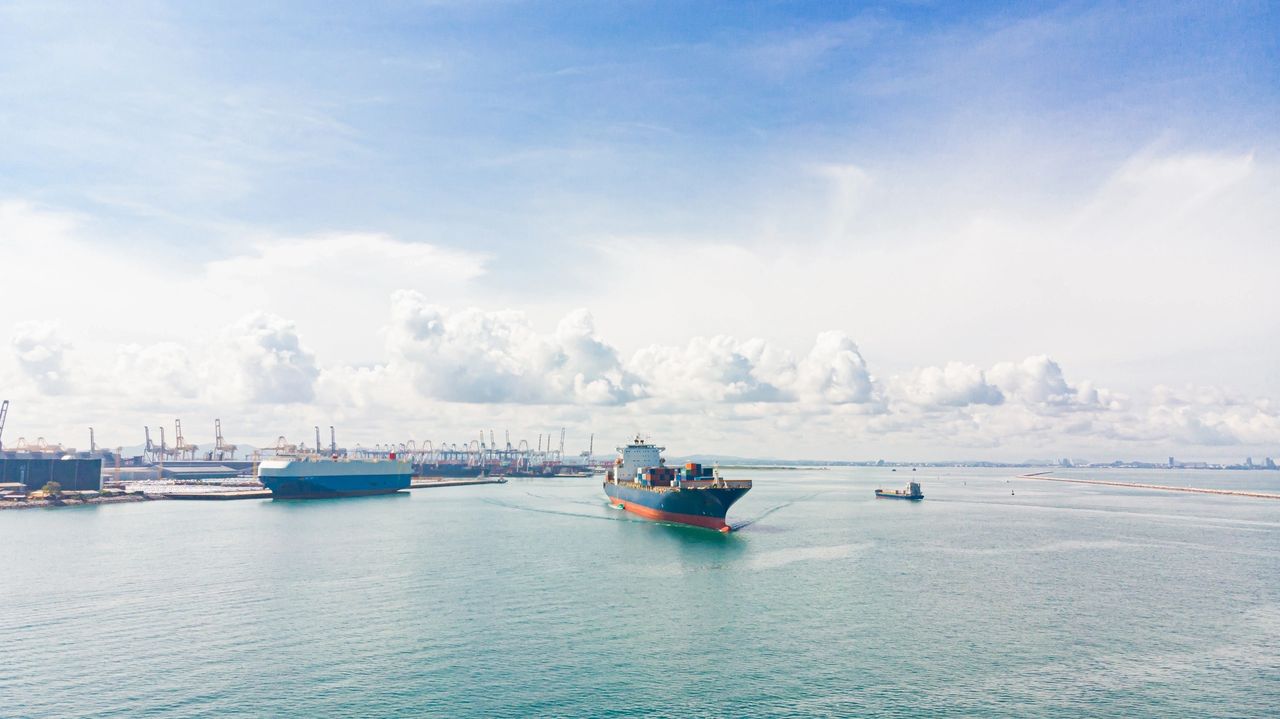
Green corridors are special shipping routes that only allow vessels running on low-or-zero-emission fuels. The idea is for the routes and their ports to make it easier and more affordable for shippers to lower their global greenhouse gas (GHG) emissions, by providing access to alternative fuels, for example.
Shipping accounts for roughly 3% of GHG emissions annually. Three types of ships are responsible for 80% of those emissions: containerships–which carry 90% of the world’s goods; tankers–which often carry fossil fuels from one place to another; and bulk shippers–which carry items such as grain. Of those three, container ships are most likely to be green corridor participants, the report said.
Green corridor shipping allows container companies to help their customers meet their own sustainability and regulatory requirements. But that benefit has a price. The report estimates that vessels eligible for green corridors will have costs of $64-72 million per year higher than other operations between 2027 and 2031. Costs are not expected to normalize until 2046.
The Global Maritime Forum has adopted some new qualifying criteria that, at least in its report, levels the playing field. Since container ships are among the Big Three emitters but are also leading the transition to lower-emission fuels, they are recognized as true green corridor agents, whereas pathways for lower-emission harbor craft, barges and offshore vessels are seen as “parallel to, but separate from, green corridors.”
Additionally, the organization only clocks initiatives with a focus on zero-emission ocean going vessels as moving the needle. And a green corridor must call itself that from the point of initiation, to avoid greenwashing. The report also focuses on routes where “the feasibility of zero-emission shipping is catalysed by public and private action” and has significant “cross-value chain collaboration, including close engagement and input from national/regional governments.”
Based on these criteria, the report said, eight initiatives announced between 2022 and 2024 were excluded from the report.
Of the many options for zero-emission fuels, methanol, ammonia, and electric are the most popular options, the report said. Methanol is the focus of 18 initiatives and popular with container vessels while ammonia, featured in 15 initiatives, is the most common fuel among bulk carriers.
Demand for these fuels could create “a watershed moment not only for green corridors but shipping decarbonisation more broadly.” Governments, port authorities, shipping companies, fuel producers and other stakeholders must put aside business as usual and find ways to collaborate on public-private partnerships to innovate new ways of doing business to facilitate the transition.
This could include forming pools to share zero-emission vessels; create shared risk-reward scenarios for purchasing the zero-emission fuels; or channeling direct investment in fuel production or structuring offtakes–who uses the fuels–to stimulate availability.



[…] Lloyd’s launched Risk Manager FuelEU to coincide with the start of the EU’s FuelEU Maritime Regulation in January 2025. The regulation requires vessels over 5,000 GT trading in the EU and European Economic Area to meet greenhouse gas (GHG) intensity reduction targets. […]
[…] to $22.5 million will go to under the Green Shipping Corridor Program to accelerate development of the Halifax-Hamburg green shipping corridor. The investment […]
[…] includes a three-year project starting in March 2025, aimed at securing commitments from major global ports and sharing verifiable strategies that benefit people and nature. In parallel, efforts will raise […]
[…] gas (GHG) strategy sets ambitious targets, but progress is slow. Low-carbon fuels remain costly, ports lack infrastructure, a lack of coordination on alternative fuels hinders investments, and developing economies struggle […]
[…] green shipping corridor is a special maritime route for vessels that use advanced technology and low or zero carbon fuels, […]
[…] promises emissions reductions of 60-95% compared to fossil fuels. Though the company has ordered a fleet of dual-fuel methanol ships, it said this is the first large vessel on which such a retrofit has been completed. The Zhoushan […]
[…] for freight and passenger services in the Baltic Sea, the North Sea and the Bay of Biscay, has new green lane transportation services that it says will reduce shipping emissions by up to […]
[…] Norway’s Ocean Hyway Cluster has been awarded NOK350,000 (USD$35,000) by Vestland County to explore building a Green Maritime Energy Station (GMES). In the proposed project, multiple types of low- and zero-emission maritime energy solutions–such as hydrogen and ammonia bunkering, shore power, and battery charging–would be co-located in a single, integrated infrastructure hub. […]
[…] partners announced plans to develop the first trans-Pacific green shipping corridor (GSC) in January of 2022. As part of the plan the carrier partners involved aimed to deploy reduced […]
[…] The Ministry of Transport of the Republic of Singapore and the Ministry of Transport of the People’s Republic of China have signed a Memorandum of Understanding (MoU) to establish the Singapore–China Green and Digital Shipping Corridor (GDSC). […]
[…] Green shipping corridors are specific routes where vessels use low-emission propulsion. As part of this effort, the Port of Huelva aims to strengthen partnerships across the maritime value chain, including industrial fuel producers, terminal operators, fuel suppliers, utilities, and commercial shipping companies, to develop European green shipping projects. […]